TIME Ideas hosts the world's leading voices, providing commentary
and expertise on the most compelling events in news, society, and
culture. We welcome outside contributions. To submit a piece, email
ideas@time.com.
....
..........
Showing posts with label Catholicism. Show all posts
Wednesday, June 6, 2018
জুন মাসে পোপ ফ্রান্সিসের বিশেষ প্রার্থনার আহবানঃ সামাজিক যোগাযোগ মাধ্যমগুলো যেন সামাজিক ঐক্য স্থাপনের জন্য কাজ করতে পারে যার ফলে সবাই যেন একে অপরের মধ্যে বিদ্যমান পার্থক্য সমূহকে সন্মান দেখায় ।
আসুন প্রার্থনা করিঃ
হে পরমকরুণাময় সৃষ্টিকর্তা তোমাকে ধন্যবাদ জানাই, তোমার সমস্ত সৃষ্টির আধিপত্ত তুমি মানব জাতিকে দিয়েছ। বর্তমান সভ্যতার অনন্য আবিষ্কার ইন্টারনেট তোমারই দান, যা একে অপরের কাছাকাছি আসা এবং সকল জাতির মাঝে সংহতি স্থাপনের একটি অপরিমেয় সম্ভাবনা তৈরি করেছে।
হে প্রভু আজ আমরা প্রার্থনা করি, তুমি আমাদের সেই জ্ঞানালোক দান কর যেন, এই ডিজিটাল নেটওয়ার্ক আমরা বৈষম্য সৃষ্টির জন্য ব্যবহার না করি বরং বিশ্ব মানবতাকে একত্রিত করার জন্য সমৃদ্ধময় একটি মজবুত প্লাটফর্ম হিসেবে ব্যবহার করতে পারি।
বিশ্বের নানা প্রান্তে অসংখ্য মানুষ নির্যাতিত, নিপীড়িত, গৃহহীন হয়ে মানবেতর জীবনযাপন করছে। সামাজিক যোগাযোগ মাধ্যমগুলো ব্যবহার করে আমরা যেন মানুষের দুঃখকষ্টের কথা বিশ্বনেতৃবৃন্দের নিকট পৌঁছে দিতে পারি, যেন বিশ্বশান্তি ¯’াপনের জন্য বিশ্বনেতৃবৃন্দ সমন্বিত ভাবে এগিয়ে আসে।
সামাজিক যোগাযোগ মাধ্যমগুলিও যেন সেই লক্ষ্যে কাজ করতে পারে যা বৈষম্য সৃষ্টি না করে প্রত্যেককে যার যার পার্থক্যসহ গ্রহণ করতে পারে এবং পার্থক্যগুলোকে সম্মান করে।
তোমার সকল দানের জন্য ধন্যবাদ ও কৃতজ্ঞতা জানিয়ে আমাদের ক্ষুদ্র প্রার্থনা তোমার চরণে রাখি। তুমি আমাদের প্রার্থনা শ্রবণ ও গ্রাহ্য কর। আমেন।
Labels:
Catechism,
Catholicism,
News
Friday, July 29, 2016
Pope Francis tells the young: don't ruin your lives looking for thrills

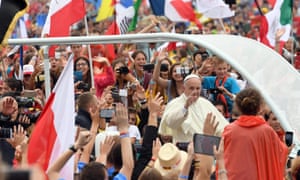
Pope Francis has warned young people against wasting their lives “looking for thrills” instead of seeking fulfilment, in his first direct address to hundreds of thousands of pilgrims gathered in Kraków.
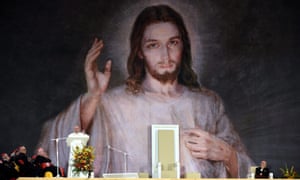
In a potent message delivered under leaden skies and in front of a giant image of Jesus, the pope spoke of his concerns for the millennial generation, who could “pay dearly” for taking “dark paths”.
“It pains me to meet young people who seem to have opted for ‘early retirement’. I worry when I see young people who have ‘thrown in the towel’ before the game has even begun, who are defeated even before they begin to play, who walk around glumly as if life has no meaning. Deep down, young people like this are bored – and boring!” Francis told a massive crowd in Błonia park in the Polish city.
“But it is also hard, and troubling, to see young people who waste their lives looking for thrills or a feeling of being alive by taking dark paths, and in the end having to pay for it – and pay dearly. It is disturbing to see young people squandering some of the best years of their lives, wasting their energies running after pedlars of fond illusions … who rob you of what is best in you.”
Addressing young people directly, Francis added: “So I ask you: Are you looking for empty thrills in life, or do you want to feel a power that can give you a lasting sense of life and fulfilment? Empty thrills or the power of grace?”
Merciful hearts, said the pope, were “ready to embrace everyone. A merciful heart is able to be a place of refuge for those who are without a home or have lost their home; it is able to build a home and a family for those forced to emigrate; it knows the meaning of tenderness and compassion. A merciful heart can share its bread with the hungry and welcome refugees and migrants.”
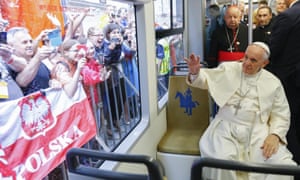
The pope travelled to Błonia, where pilgrims began gathering several
hours ahead of his address, in a white and yellow city tram accompanied
by youths with disabilities and their carers. The vehicle’s destination
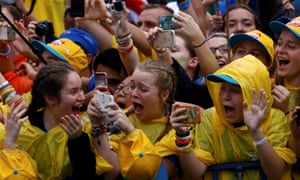
indicator read “Tram del Papa”.Francis waved through rain-spattered windows at crowds lining the route. On arrival at the park, he transferred to his open-sided pope mobile, which wove through a dense mass of flag-waving, singing pilgrims, with most clad in plastic rain ponchos.
Messages in Polish and English broadcast through loudspeakers warned people not to leave backpacks and other items unattended. Security is at its highest possible level in Kraków and other places the pope is scheduled to visit.
Among the crowd at Błonia was Jessica Rees, from Wrexham, who had travelled to the World Youth Day festival with two sisters and her mother.
“There are very few young people at our church, so it’s inspiring to see so many here celebrating their faith. It makes you feel you’re not alone,” said Jessica, 21.
Anel Zuniga, 33, who lives in London, said she had heard the pope speak in Brazil three years ago. “Whenever he speaks, it’s as though he was talking directly to you,” she said. “Even people who don’t believe [in God] listen to what he says. His message gets across.”
The pope had brought “freshness” to the Catholic church, said Joseph Philip, 23, from Plymouth. “He has made it easier for us to talk about our faith.”

Earlier on Thursday, the pope stumbled on an altar step at the Jasna Góra monastery in Częstochowa, 60 miles from Kraków. He was swiftly helped to his feet by servers, and his spokesman later said he was fine.
The monastery is home to the shrine of the legendary Black Madonna, a 14th-century icon of Mary and Jesus blackened by centuries of candle smoke, believed to have miraculous powers. Francis gazed at it in silence for several minutes before bowing his head in prayer.
Before returning to Kraków by military helicopter, he celebrated an open air mass in Częstochowa to mark the 1,050th anniversary of Poland adopting Roman Catholicism.
In his homily, he praised “ordinary and remarkable people” who had held on to their Catholic faith in times of adversity.

“Your own history, shaped by the gospel, the cross and fidelity to the church, has seen the contagious power of a genuine faith, passed down from family to family, from fathers to sons and above all from mothers and grandmothers, whom we need so much to thank,” he said.
Lech Wałęsa, Poland’s former president and founder of the Solidarity movement – and a devout Catholic – said a late invitation had prevented him from attending the mass at Jasna Góra.
Wałęsa said on his Facebook account that his invitation arrived on Tuesday, too late for him to cancel or postpone appointments in Toruń, almost 200 miles from Częstochowa.
Poland’s president, Andrzej Duda, and members of the rightwing government led by the Law and Justice party were present at the mass.
Labels:
Catholicism,
News
Sunday, January 17, 2016
Pope Francis' hand of friendship to Jews
Pope Francis, following in the
historic footsteps of his predecessors, will cross the river Tiber to
Rome's Synagogue, the Grand Temple, on the opposite bank of the river
Tiber to the Vatican on Sunday.
The building dates back to 1870,
when Italy became a united country for the first time since the fall of
the Roman Empire and the former Papal States ceased to exist. He will be welcomed by Italy's Chief Rabbi Riccardo Di Segni and by the head of Italy's Jewish community Ruth Dureghello.
His courtesy visit, the third by a reigning pope, has aroused expectations of further rapprochement between Catholics and Jews. A Vatican statement last December said Catholics should not actively seek to convert Jews and must do all they can to repel anti-Semitic tendencies.
This document, although it was not signed personally by the Pope, pleased many Jewish leaders.
They took it as evidence that Pope Francis, who enjoys a close friendship with an Argentine rabbi (they even wrote a book together) intends to dispel any doubts that the Catholic Church has decided to turn over a new page in its troubled past relations, both religious and political, with Jews and with the state of Israel.
The document pointed out that the first Christians were in fact Jews - which makes them different from people of all the other world religions. The Jewish community in Rome dates back to the second century BC.
The trouble began in 1215. A Pope decided that Roman Jews should be recognisable by their dress. He decreed a special hat for the men with a cone in the middle and a scarf with blue stripes for the women.
They confined the city's Jewish population to an area which became known as the "ghetto" - an Italian word, originating in Venice, the site of the world's first Jewish ghetto, now used to describe any such forced residence of a particular ethnic, national or religious group.
In the garden of the Grand Temple, situated in the heart of the former Rome ghetto, Pope Francis will commemorate both the deportation in 1943 of over 1,000 Roman Jews by Hitler's SS, most of whom perished in Nazi death camps, and an attack by Palestinian terrorists in 1982, Italy's worst post-war anti-Semitic act.
Religious reconciliation with the Jews began with the issuing of the Second Vatican Council's most radical document "Nostrae Aetate" (In Our Times) in 1966.
This key decision by the world's Catholic bishops and endorsed by Pope Paul VI unconditionally repudiated anti-Semitism and cancelled centuries of Catholics blaming the Jews for Jesus Christ's death.
Celebrating the 50th anniversary, Pope Francis said: "From indifference and opposition, we've turned to co-operation and goodwill. From enemies and strangers, we've become friends and brothers."
Source: http://www.bbc.com/news/world-europe-35336807
Labels:
Catholicism,
News
Wednesday, December 23, 2015
What a ridiculous Christmas!
If Christmas is one of the tasty food items, poor people prepare it the whole year and the rich people eat it in one day.

The whole year some people must worship the mighty God. The rich people
are busy with their own business of making money and comfortable life.
The second god (money) gets the most priority. No time to pray and
Worship. Poor people worship the first God, the one and all mighty. Does
the Christmas Celebration brings any special joy to poor ? House
decoration, new dresses, rich foods, party, drinks all for the rich
people. Who needs Christ during Christmas?
Labels:
Catholicism
Sunday, November 1, 2015
All Souls' Day
All Souls Day is a holy day set aside for honoring the dead. The day
is primarily celebrated in the Catholic Church, but it is also
celebrated in the Eastern Orthodox Church and a few other denominations
of Christianity. The Anglican church is the largest protestant church to
celebrate the holy day. Most protestant denominations do not recognize
the holiday and disagree with the theology behind it.
According to Catholic belief, the soul of a person who dies can go to
one of three places. The first is heaven, where a person who dies in a
state of perfect grace and communion with God goes. The second is hell,
where those who die in a state of mortal sin are naturally condemned by
their choice. The intermediate option is purgatory, which is thought to
be where most people, free of mortal sin, but still in a state of lesser
(venial) sin, must go.
Purgatory is necessary so that souls can be cleansed and perfected
before they enter into heaven. There is scriptural basis for this
belief. The primary reference is in 2 Maccabees, 12:26 and 12:32.
"Turning to supplication, they prayed that the sinful deed might be
fully blotted out... Thus made atonement for the dead that they might be
free from sin."
Additional references are found in Zechariah, Sirach, and the Gospel
of Matthew. Jewish tradition also reinforces this belief as well as the
tradition and teaching of the Church, which has been affirmed throughout
history.
Consistent with these teachings and traditions, Catholics believe
that through the prayers of the faithful on Earth, the dead are cleansed
of their sins so they may enter into heaven.
The belief in purgatory has not been without controversy. Certainly,
some flagrant abuses of the doctrine were used to raise money for the
Church during the renaissance. Famously, Martin Luther argued with the
monk, Johan Tetzel, over the sale of indulgences. Indulgences were sold
as spiritual pardons to the poor and applied to the souls of the dead
(or the living) to get people into heaven. The abuse of indulgences and
the blatant, sometimes fraudulent practice of selling indulgences for
money, led to Luther's protest.
When Martin Luther translated the Bible into German, he omitted the
seven books of the canon which refer to prayers for the dead. He then
introduced the heretical belief that people are simply saved, or not,
and argued that there is no need to pray for the dead to get them into
heaven.
The Church reeled from Luther's accusation, and reformed its practice
of selling indulgences. However, it reemphasized the Biblical and
traditional practice of praying for the departed and the importance of
such prayers.
All Souls Day is celebrated in much of the western world on November
2. Other rites have their own celebrations. The Eastern Orthodox Church
has several such days throughout the year, mostly on Saturdays. All
Souls Day is not a holy day of obligation. It should not be confused
with All Saints' Day, which is a holy day of obligation.
Many cultures also mark the day differently. In North America,
Americans may say extra prayers or light candles for the departed. In
parts of Latin America, families visit the graves of their ancestors and
sometimes leave food offerings for the departed.
More about All Souls' Day from Wikipedia
All Souls' Day commemorates the faithful departed.
In Western Christianity, this day is observed principally in the
Catholic Church, although some churches of the Anglican Communion and
the Old Catholic Churches also celebrate it. The Eastern Orthodox
churches observe several All Souls' Days during the year. The Roman
Catholic celebration is associated with the doctrine that the souls of
the faithful who at death have not been cleansed from the temporal
punishment due to venial sins and from attachment to mortal sins cannot
immediately attain the beatific vision in heaven, and that they may be
helped to do so by prayer and by the sacrifice of the Mass (see
Purgatory).[1]
In other words, when they died, they had not yet attained full
sanctification and moral perfection, a requirement for entrance into
Heaven. This sanctification is carried out posthumously in Purgatory.
The official name of the celebration in the Roman Rite liturgy of the Roman Catholic Church is "The Commemoration of All the Faithful Departed".[1]
Another popular name in English is Feast of All Souls. In some other languages the celebration, not necessarily on the same date, is known as Day of the Dead (Día de los Muertos or de los Difuntos in Spanish-speaking countries; halottak napja in Hungary; Yom el Maouta in Lebanon, Israel and Syria).
The Western celebration of All Souls' Day is on 2 November and
follows All Saints' Day, which commemorates the departed who have
attained the beatific vision. If 2 November falls on a Sunday, the Mass
is of All Souls, but the Office is that of the Sunday. However, Morning
and Evening Prayer (Lauds and Vespers) for the Dead, in which the people
participate, may be said. In pre-1969 calendars, which some still
follow, and in the Anglican Communion, All Souls Day is instead
transferred, whenever 2 November falls on a Sunday, to the next day, 3
November, as in 2008.
The Eastern Orthodox Church dedicates several days throughout the
year to the dead, mostly on Saturdays, because of Jesus' resting in the
tomb on Saturday.
The Western celebration
Historically, the Western tradition identifies the general custom of
praying for the dead dating as far back as 2 Maccabees 12:42-46. The
custom of setting apart a special day for intercession for certain of
the faithful on November 2 was first established by St. Odilo of Cluny
(d. 1048) at his abbey of Cluny in 998.[2]
From Cluny the custom spread to the other houses of the Cluniac order,
which became the largest and most extensive network of monasteries in
Europe. The celebration was soon adopted in several dioceses in France,
and spread throughout the Western Church. It was accepted in Rome only
in the fourteenth century. While 2 November remained the liturgical
celebration, in time the entire month of November became associated in
the Western Catholic tradition with prayer for the departed; lists of
names of those to be remembered being placed in the proximity of the
altar on which the sacrifice of the mass is offered.[3]
The legend connected with its foundation is given by Peter Damiani in his Life of St Odilo:
a pilgrim returning from the Holy Land was cast by a storm on a
desolate island. A hermit living there told him that amid the rocks was a
chasm communicating with purgatory, from which perpetually rose the
groans of tortured souls. The hermit also claimed he had heard the
demons complaining of the efficacy of the prayers of the faithful, and
especially the monks of Cluny, in rescuing their victims. Upon returning
home, the pilgrim hastened to inform the abbot of Cluny, who then set 2
November as a day of intercession on the part of his community for all
the souls in Purgatory.
Eastern-Rite Catholics and the Eastern Orthodox churches
Among Eastern Orthodox and Eastern Catholic Christians, there are
several All Souls' Days during the year. Most of these fall on Saturday,
since Jesus lay in the Tomb on Holy Saturday. These are referred to as Soul Saturdays. They occur on the following occasions:
- The Saturday of Meatfare Week (the second Saturday before Great Lent).the day before the Sunday of the Last Judgement
- The second Saturday of Great Lent
- The third Saturday of Great Lent
- The fourth Saturday of Great Lent
- Radonitsa (Monday or Tuesday after Thomas Sunday)
- The Saturday before Pentecost
- Demetrius Saturday (the Saturday before the feast of Saint Demetrius of Thessaloniki.26 October) (In the Bulgarian Orthodox Church there is a commemoration of the dead on the Saturday before the feast of Saint Michael the Archangel.8 November, instead of the Demetrius Soul Saturday)
(In the Serbian Orthodox Church there is also a commemoration of the
dead on the Saturday closest to the Conception of St. John the
Baptist.23 September)
Saturdays throughout the year are devoted to general prayer for the
departed, unless some greater feast or saint's commemoration occurs.
Protestantism and Roman Catholic Church
At the Reformation the celebration of All Souls' Day was fused with
All Saints' Day in the Anglican Church, though it was renewed
individually in certain churches in connection with the Catholic Revival
of the 19th century. The observance was restored with the publication
of the 1980 Alternative Service Book, and it features in Common Worship as a Lesser Festival called "Commemoration of the Faithful Departed (All Souls' Day)".
Among continental Protestants its tradition has been more tenaciously
maintained. Even Luther's influence was not sufficient to abolish its
celebration in Saxony during his lifetime; and, though its
ecclesiastical sanction soon lapsed even in the Lutheran Church, its
memory survives strongly in popular custom. Just as it is the custom of
French people, of all ranks and creeds, to decorate the graves of their
dead on the jour des morts, so German [3]
and Polish people stream to the graveyards once a year with offerings
of flowers and special grave lights (see the picture), and among Czech
people the custom of visiting and tidying graves of relatives on the day
is quite common even among atheists. In North America, however, most
Protestant acknowledgment of the holiday is generally secular,
celebrated in the form of Halloween festivities.
Folklore
The origins of All Souls' Day in European folklore and folk belief are related to customs of ancestor veneration[citation needed]
practised worldwide, through events such as the Chinese Ghost Festival,
the Japanese Bon Festival, or the Mexican Day of the Dead. The Roman
custom was that of the Lemuria.
In Tirol, cakes are left for them on the table and the room kept warm
for their comfort. In Brittany, people flock to the cemeteries at
nightfall to kneel, bareheaded, at the graves of their loved ones, and
to anoint the hollow of the tombstone with holy water or to pour
libations of milk on it. At bedtime, the supper is left on the table for
the souls.
In Bolivia, many people believe that the dead eat the food that is
left out for them. In Brazil people attend a mass or visit the cemetery
taking flowers to decorate their relatives' grave, but no food is
involved.
See also
Notes
- ^ a b Mershman 1907.
- ^ The decree ordaining the celebration is printed in the Bollandist Acta Sanctorum (Saec. VI, pt. i. p. 585).
- ^ a b Anonymous 1911.
from Wikipedia
Labels:
articles,
Catechism,
Catholicism
Saturday, October 31, 2015
The Solemnity of All Saints Day | Meaning | History :
All Saints Day, the day on which Catholics celebrate all the saints,
known and unknown, is a surprisingly old feast. It arose out of the
Christian tradition of celebrating the martyrdom of saints on the
anniversary of their martyrdom. When martyrdoms increased during the
persecutions of the late Roman Empire, local dioceses instituted a
common feast day in order to ensure that all martyrs, known and unknown,
were properly honored.
The current date of November 1 was instituted by Pope Gregory III (731-741), when he consecrated a chapel to all the martyrs in St. Peter's Basilica in Rome and ordered an annual celebration. This celebration was originally confined to the diocese of Rome, but Pope Gregory IV (827-844) extended the feast to the entire Church and ordered it to be celebrated on November 1.
The vigil or eve of the feast, October 31, is commonly known as All Hallows Eve, or Halloween. Despite concerns among some Christians (including some Catholics) in recent years about the "pagan origins" of Halloween (see Halloween, Jack Chick, and Anti-Catholicism), the vigil was celebrated from the beginning—long before Irish practices, stripped of their pagan origins (just as the Christmas tree was stripped of similar connotations), were incorporated into popular celebrations of the feast.

Quick Facts
- Date: November 1
- Type of Feast: Solemnity; Holy Day of Obligation (see Is All Saints Day a Holy Day of Obligation? for more details)
- Readings: Revelation 7:2-4, 9-14; Psalm 24:1bc-2, 3-4ab, 5-6; 1 John 3:1-3; Matthew 5:1-12a (full text here)
- Prayers: Litany of the Saints
- Other Names for the Feast: All Saints' Day, Feast of All Saints
History of All Saints Day
By the late fourth century, this common feast was celebrated in Antioch, and Saint Ephrem the Syrian mentioned it in a sermon in 373. In the early centuries, this feast was celebrated in the Easter season, and the Eastern Churches, both Catholic and Orthodox, still celebrate it then.The current date of November 1 was instituted by Pope Gregory III (731-741), when he consecrated a chapel to all the martyrs in St. Peter's Basilica in Rome and ordered an annual celebration. This celebration was originally confined to the diocese of Rome, but Pope Gregory IV (827-844) extended the feast to the entire Church and ordered it to be celebrated on November 1.
The vigil or eve of the feast, October 31, is commonly known as All Hallows Eve, or Halloween. Despite concerns among some Christians (including some Catholics) in recent years about the "pagan origins" of Halloween (see Halloween, Jack Chick, and Anti-Catholicism), the vigil was celebrated from the beginning—long before Irish practices, stripped of their pagan origins (just as the Christmas tree was stripped of similar connotations), were incorporated into popular celebrations of the feast.
Labels:
articles,
Catechism,
Catholicism
Thursday, October 29, 2015
Who is Jesus?
Who is Jesus?
You may want to take a tour of some of the major
highlights of Jesus’ life. Or you may want to preview what people were saying before Christ was born. Of course,
you may want to check out Jesus’ claims about
himself. Some may be interested in learning about the muscle Jesus exercised and the miracles he performed.
Knowledgeable people will agree that Jesus Christ has made quite an impact
on the world. You may even come to learn that Yeshua is indeed the
promised Messiah of the Old Testament. If you prefer, you can take time
to further investigate Jesus Christ’s claims in the
New Testament.
But after all is said and done, the key question for you
is, “What does all this information about Jesus Christ have to do
with my life?” Or, you may have other questions. The following describes
how you can begin a personal relationship with Jesus Christ today,
experience forgiveness of your sins, receive eternal life, and gain a
whole new purpose for living.
Just as there are physical laws that govern the physical universe, so are there spiritual laws which govern your relationship with God.
1. God loves you and offers a wonderful plan for your life.
(References contained on this page are from the Bible and should be read in context wherever possible.)
God's Love
"God so loved the world that He gave His one and only Son, that whoever believes in Him shall not perish, but have eternal life" (John 3:16 NIV).
God's Plan
[Christ speaking] "I came that they might have life, and might have it abundantly" [that it might be full and meaningful] (John 10:10).
Why is it that most people are not experiencing the abundant life?
Because...
2. Man is sinful and separated from God. Therefore, he cannot know and experience God's love and plan for his life.
Man Is Sinful
"All have sinned and fall short of the glory of God" (Romans 3:23).
Man was created to have fellowship with God; but, because of his
stubborn self-will, he chose to go his own independent way, and
fellowship with God
was broken. This self-will, characterized by an attitude of active
rebellion or passive indifference, is evidence of what the Bible calls
sin.
Man Is Separated
"The wages of sin is death" [spiritual separation from God] (Romans 6:23).
This diagram illustrates that God is holy and man is sinful. A great
gulf separates the two. The arrows illustrate that man is continually
trying to
reach God and the abundant life through his own efforts, such as seeking
to lead a good life, philosophy, or religion - but he inevitably
fails.
The third law explains the only way to bridge this gulf...
3. Jesus Christ is God's ONLY provision for man's sin. Through Him you can know and experience God's love and plan for your life.
He Died in Our Place
"God demonstrates His own love toward us, in that while we were yet sinners, Christ died for us."(Romans 5:8).
He Rose From the Dead
"Christ died for our sins...He was buried...He was raised on the third day, according to the Scriptures...He appeared to Peter, then to the twelve. After that He appeared to to more than 500..." (1 Corinthians 15:3-6).
He Is the Only Way to God
"Jesus said to him, 'I am the way, and the truth, and the life; no one comes to the Father, but through me."(John 14:6).
This diagram illustrates that God has bridged the gulf which
separates us from Him by sending His Son, Jesus Christ, to die on the
cross in our place to pay the penalty for our sins.
However, it is not enough just to know these three laws...
4. We must individually receive Jesus Christ as Savior and Lord; then we can know and experience God's love and plan for our lives.
We Must Receive Christ
"As many as received Him, to them He gave the right to become children of God, even to those who believe in His name" (John 1:12).
We Receive Christ Through Faith
"By grace you have been saved through faith; and that not of yourselves, it is the gift of God; not as a result of works, that no one should boast" (Ephesians 2:8,9).
When We Receive Christ, We Experience a New Birth
(Read John 3:1-8)
We Receive Christ by Personal Invitation
[Christ speaking] "Behold, I stand at the door and knock; if any one hears My voice and opens the door, I will come in to him" (Revelation 3:20).
Receiving Christ involves turning to God from self (repentance) and
trusting Christ to come into our lives to forgive our sins and to make
us what He wants us to be. Just to agree intellectually that Jesus
Christ is the Son of God and that He died on the cross for our sins is
not enough. Nor is it enough to have an emotional experience. You
receive Jesus Christ by faith, as an act of the will.
These two circles represent two kinds of lives:
Which circle best describes your life?
Which circle would you like to have represent your life?
The following explains how you can receive Christ:
You can receive Christ right now by faith through prayer
(Prayer is talking to God)
God knows your heart and is not so concerned with your words as He is
with the attitude of your heart. The following is a suggested prayer:
"Lord Jesus, I need You. Thank You for dying on the cross for my
sins. I open the door of my life and receive You as my Savior and Lord.
Thank You for forgiving my sins and giving me
eternal life. Take control of the throne of my life. Make me the kind of
person You want me to be."
Does this prayer express the desire of your heart? If it does, I
invite you to pray this prayer right now and Christ will come into your
life, as He promised.
Did you pray this prayer?
YES
Labels:
articles,
Catholicism
Friday, July 31, 2015
Pope Francis: 'Facts are more important than ideas'
"Facts are more important than ideas" is a statement from Pope Francis that one would have never heard from Popes Benedict XVI or John Paul II.
It is not that Pope Francis is dumb or an anti-intellectual. He is
well-read and thoughtful, but by no stretch of the imagination can he be
called a scholar. His training as a scientist and his life experience
make him approach theory in a different way than John Paul and Benedict.
It also helps explain his approach to the environment in Laudato Si'.
John Paul was trained first as a philosopher and then as a
theologian, and as a priest, he taught ethics at a university. He wrote
in a style that was not easily digested. Benedict was trained in
theology and became one of the leading theologians of his generation.
Both wrote scholarly books that promoted a particular perspective.
On the other hand, Francis' initial training prior to entering the
seminary was as a chemist. He never finished his doctorate in theology.
He is what academics refer to as ABD, "all but dissertation." He never
wrote scholarly books. He was a wide-ranging consumer of theology, not
the proponent of a particular view.
For John Paul the philosopher and Benedict the theologian, ideas were
paramount. But for Francis the scientist and pastor, facts really
matter.
For John Paul and Benedict, if reality does not reflect the ideal,
then reality must change, whereas for Francis, if facts and theory
clash, he, like a good scientist, is willing to question the theory.
The personal histories of these three popes also marked them. For
John Paul, it was the experience of a church under siege, first by the
Nazis and then by the communists. Church unity was paramount in such a
struggle. Even after the fall of communism, his model of the church was
still that of a church under siege, except now the enemy was much of
Western culture -- relativism, consumerism, etc.
Likewise, Benedict was influenced first by the Second Vatican Council
and then by the upheaval that followed it and the 1968 student riots,
which reminded him of the Nazi Brownshirts of his youth. As with John
Paul, unity and order were important values.
As a teacher of graduate students and a director of dissertations,
Benedict spent much of his time guiding and correcting students. He did
not interact all that well with his theological colleagues. It was not
surprising that as head of the Congregation for the Doctrine of the
Faith, he saw his job as guiding and correcting theologians whom he
treated like graduate students, not intellectual equals.
Francis, on the other hand, as a young priest was quickly thrust into
the spiritual formation of young Jesuits and became director of
novices, provincial and rector of the Jesuit seminary. He dealt with
people, not ideas; discernment, not logic, was the guiding principle.
This experience of Jesuit governance was rewarding but not irenic. He
experienced conflict and failure. He acknowledges that he was too young
for the authority he was given and that he made mistakes. He learned
that he needed to listen and consult before making decisions. He brought
these learned lessons to his work as archbishop of Buenos Aires,
Argentina, where he spent much of his time with people in the slums.
Francis also lived in Argentina at a time when there was a clash of
ideologies going on, and he grew to hate ideological thinking. I define
an ideology as a system by which we ignore data and experience in order
to preserve our opinions. Peronism, communism, and libertarian
capitalism were fighting for power. The military, following the idea of
the national security state, violently suppressed all opposition.
At the same time, while John Paul experienced communism as a foreign
oppressor, Francis met communism as a young man in the person of his
first boss and mentor, whom he admired and with whom he maintained
friendship for life. He learned early that a communist could be a good
person.
Pope Francis is uncomfortable with ideologies on the left and the
right. He was critical of certain forms of liberation theology because
they incorporated Marxist analysis and supported violent revolution. He
felt that these theologians were imposing their ideas on the poor rather
than listening to their views.
But Francis is even more critical of libertarian capitalism, which
blindly claims that all boats would rise with the tide of economic
growth, because the people he met in the slums of Buenos Aires were in
fact drowning without boats.
All of this background influenced the writing of Francis' encyclical Laudato Si'.
Rather than starting with philosophy and theology, the first chapter of
the encyclical starts with science. What are the facts?
The pope and his collaborators began by consulting widely with the
scientific community. What is happening to the environment? They went to
the scientific community not to argue with it, but to learn from it. If
there was a consensus in the scientific community, they accepted it.
Although the church gets a bad rap for Galileo, in fact, the Catholic
church has been a supporter of science through the centuries (Jesuit
astronomers, Gregor Mendel, Georges Lemaître, etc.). This was grounded
in Catholic theology that argued that there can be no conflict between
faith and reason because both are from God.
This does not mean that there were not bumps along the road (Galileo,
Darwin, Freud), but Catholicism was usually able to reconcile itself
with new science faster than those for whom the Bible was the only
source of authority. Today, conflict is over how science is used, not
over what science discovers.
What did the pope learn about the environment from scientists?
Chapter 1 of the encyclical first reports on air pollution: "Exposure
to atmospheric pollutants produces a broad spectrum of health hazards,
especially for the poor, and causes millions of premature deaths."
Pollution is "caused by transport, industrial fumes, substances which
contribute to the acidification of soil and water, fertilizers,
insecticides, fungicides, herbicides and agrotoxins in general."
Then the chapter moves on to the pollution caused by waste. "Each
year hundreds of millions of tons of waste are generated, much of it
non-biodegradable, highly toxic and radioactive, from homes and
businesses, from construction and demolition sites, from clinical,
electronic and industrial sources."
The pope also learned that "a very solid scientific consensus
indicates that we are presently witnessing a disturbing warming of the
climatic system" and that "a number of scientific studies indicate that
most global warming in recent decades is due to the great concentration
of greenhouse gases (carbon dioxide, methane, nitrogen oxides and
others) released mainly as a result of human activity."
Chapter 1 includes a discussion of how global warming can lead to
melting of glaciers and polar ice, rising sea levels, and the release of
methane gas from the decomposition of frozen organic material. It also
notes that "carbon dioxide pollution increases the acidification of the
oceans and compromises the marine food chain."
"If present trends continue," the encyclical states, "this century
may well witness extraordinary climate change and an unprecedented
destruction of ecosystems, with serious consequences for all of us."
Chapter 1 devotes an entire section to the loss of biodiversity, its
causes and consequences. "Each year sees the disappearance of thousands
of plant and animal species which we will never know, which our children
will never see, because they have been lost for ever. The great
majority become extinct for reasons related to human activity." These
are resources that will not be available to future generations.
The encyclical reports on polluted water supplies, dying coral reefs,
and deforestation. It summarizes the current thinking of scientists
about environmental issues.
Later in the encyclical, Francis writes, "Doomsday predictions can no
longer be met with irony or disdain. We may well be leaving to coming
generations debris, desolation and filth. The pace of consumption, waste
and environmental change has so stretched the planet's capacity that
our contemporary lifestyle, unsustainable as it is, can only
precipitate catastrophes."
Facts matter when it comes to the environment, which is why Francis
begins his encyclical with a presentation of the scientific consensus on
the state of the environment and where we are going. These facts
present the world with a moral dilemma that will be explicated later in
the encyclical.
Facts, in Francis' universe, should not be twisted to fit our ideas.
Rather, facts can force us to change our ideas. For example, what it
means to be a Christian in the 21st century must change when confronted
with environmental crisis we face.
[Jesuit Fr. Thomas Reese is a senior analyst for NCR and author of Inside the Vatican: The Politics and Organization of the Catholic Church. His email address is treesesj@ncronline.org. Follow him on Twitter: @ThomasReeseSJ.]
Source: http://ncronline.org/blogs/faith-and-justice/pope-francis-facts-are-more-important-ideas
Labels:
Catechism,
Catholicism,
News
The Pope Francis Statement That Changed the Church on LGBT (Lesbian, gay, bisexual, and transgender) Issues.
“If someone is gay and searches for the Lord and has good will, who am I to judge?” Two years ago Tuesday, Pope Francis uttered these words, sending shockwaves throughout the Catholic Church and the world. His position stood in contrast to that of his predecessors: Months earlier, Pope Benedict XVI suggested that gay marriage was a threat to global peace.
Under the leadership of Pope Francis, the Catholic Church is evolving
on LGBT issues. As theologian David Cloutier has noted, the process
isn’t political—it’s spiritual. The church is beginning to discern more
deeply the full measure of God’s presence in LGBT individuals and, yes,
couples, too. There have been five notable moments in this evolution.
1. Pope Francis said that God doesn’t condemn LGBT individuals — Sept. 30, 2013
In an interview with America Magazine, Pope Francis revealed his pastoral approach toward the LGBT community:
A person once asked me, in a provocative manner, if I approved of homosexuality. I replied with another question: ‘Tell me: when God looks at a gay person, does he endorse the existence of this person with love, or reject and condemn this person?’ We must always consider the person. Here we enter into the mystery of the human being.
2. Pope Francis suggested the church could be open to civil unions — March 5, 2014
Francis said in an interview that the church could be open to same-sex civil unions, a view he had first voiced as archbishop of Buenos Aires.
The pope reiterated the church’s teaching that a “marriage is between a
man and a woman” but argued that on civil unions, “we have to look at
different cases and evaluate them in their variety.”
3. The Francis effect goes global — Summer of 2014
The summer of 2014 was a remarkable period during which a number of
high-ranking Catholic prelates signaled that Pope Francis’s more open
posture had permeated throughout the Catholic world. In May, a
top-ranking Italian bishop said that the church should listen to same-sex marriage arguments. A few weeks later, Brazilian Cardinal Cláudio Hummes, said he “didn’t know” whether Jesus would oppose gay marriage. In early September, New York Cardinal Timothy Dolan approved the St. Patrick Day Parade Committee’s decision to allow a gay group to march
in the 2015 parade under their own banner. (Twenty-one years earlier,
one of Dolan’s predecessors, Cardinal John O’Connor, said that to allow a
gay group to march would be a slander to the Apostles’ Creed.)
4. The Synod on the Family’s interim report affirmed the “gifts and qualities” of LGBT individuals — October 2014
The bishops gathered for Pope Francis’s Synod on the Family in October 2014 issued a report suggesting that the church should create a more inclusive space for LGBT Catholics.
In the document, they said that the LGBT community has “gifts and
qualities to offer to the Christian community,” and they asked, “Are we
capable of welcoming these people, guaranteeing to them a fraternal
space in our communities?” Though this language was rejected in the final draft, it sparked a conversation that the church could formally change its stance toward the LGBT community when the bishops meet again this October.
5. The pope began a series of meetings and dialogues with LGBT individuals and activists — 2015
Throughout the first months of 2015, Pope Francis had several encounters with LGBT individuals and groups, including a transgender man from Spain who was excluded from his parish community, and gay and transgender prisoners in Naples. The Vatican also gave the VIP treatment to a pro-LGBT American Catholic group visiting Rome and the pope met with a gay Paraguayan activist during his recent trip to South America.
Collectively these events signal a church that is more open to
welcoming the LGBT community and the diverse realities of the modern
family than it was two years ago. After the Supreme Court’s ruling in
support of same-sex marriage last month, Blase Cupich, Pope Francis’s
handpicked archbishop of Chicago, said the church’s respect for LGBT individuals
“must be real, not rhetorical, and ever reflective of the Church’s
commitment to accompanying all people.” Such language would have been
rare two years
Labels:
Catechism,
Catholicism,
News
Thursday, July 30, 2015
Saint of the Day for Friday, July 31st, 2015 : St. Ignatius Loyola
Labels:
Catechism,
Catholicism,
News
Tuesday, July 28, 2015
The Life of Jesus in Chronological Order
The Birth of John the Baptist
October, 7 B.C.
Jerusalem
Gabriel Announces John's Birth (Lk
1:5-25)
The History of the Birth of Jesus
The Genealogy of Jesus (Mat
1:1-17; Lk 3:23-38).
Nazareth
July, 6 B.C.
Gabriel Announces to Mary (Lk
1:26-38).
Mary's Visits Elizabeth (Lk
1:39-56).
An Angel Comes to Joseph (Mat
1:18-25).
Bethlehem
The Decree of Augustus Caesar and
the Birth of Christ (Lk
2:1-7).
The First Visitors - Shepherds (Lk
2:8-20).
The Second Visitors - Magi (Mat
2:1-12).
Jerusalem
April, 5 B.C.
Jesus is Circumcised and Presented
in the Temple (Lk
2:21-38).
Egypt
March, 4 B.C.
Out of Egypt (Mat
2:13-23).
Herod the Great Dies
Nazareth
Jesus' Early Years
Jerusalem
April, 8 A.D.
The Boy Jesus at the Temple (Lk
2:41-52).
The Beginning of His Ministry
The Jordan
September, 25 A.D.
Jesus is Baptized in the Jordan (Mat
3:13-17; Mk 1:9-11; Lk 3:21-23).
The Wilderness
The Temptation in the Wilderness (Mat
4:1-11; Mk 1:12, 13; Lk 4:1-13).
The Eternal Word (Jn
1:1-18).
Bethabara
The Testimony of John (Jn
1:19-34).
The First Disciples (Jn
1:35-51).
Cana
Turning Water to Wine (Jn
2:1-12).
Jesus Visits Jerusalem
The First Passover
Jerusalem
April, 26 A.D.
Jesus was 30 Years of Age, A House
of Merchandise (Jn
2:13-25).
Unless One is Born Again (Jn
3:1-21).
Jesus Baptizes (Jn
3:22, with 4:2).
Galilee
He Departed Again to Galilee (Mat
4:12; Mk 1:14; Lk 4:14; Jn 4:1-3).
Samaria
The Woman at the Well (Jn
4:4-42).
Jesus' Ministry in Galilee
Galilee
He Taught in Their Synagogues (Mt
4:17; Mk 1:14,15; Lk 4:14,15; Jn 4:43-45).
Nazareth
A Certain Nobleman (Jn
4:46-54)
Physician, Heal Yourself! (Mat
4:13-16; Lk 4:16-31).
Sea of Galilee
Peter, Andrew, James, and John (Mat
4:18-22; Mk 1:16-20; Lk 5:1-11).
Galilee
And Jesus Went About All Galilee .
. Teaching (Mat
4:23-25; Mk 1:35-39, Lk 4:42-44).
A Man With an Unclean Spirit (Mk
1:21-28; Lk 4:31-37).
Capernaum
Simon's Wife's Mother Lay Sick (Mat
8:14-17; Mk 1:29-34; Lk 4:38-41).
Then a Leper Came to Him (Mat
8:2-4; Mk 1:40-45; Lk 5:12-16).
They Brought to Him a Paralytic (Mat
9:2-8; Mk 2:1-12; Lk 5:17-26).
Capernaum
Matthew the Tax Collector (Mat
9:9; Mk 2:13, 14; Lk 5:27, 28).
The Second Passover
April, 27 A.D.
Jerusalem
Healing at the Pool of Bethesda on
the Sabbath day (Jn
5:1-47).
Healing in the Synagogue on the
Sabbath day (Mat
12:9-14; Mk 3:1-6, Lk 6:6-11).
And in His Name Gentiles Will
Trust (Mat
12:15-21; Mk 3:7-12)
Then He Appointed Twelve (Mat
10:2-4; Mk 3:13-19; Lk 6: 12-19).
The Sermon on the Mount (Mat
5-7; Lk 6:20-49).
A Certain Centurion's Servant (Mat
8:5-13; Lk 7:1-10).
Nain
Raises the Dead Son at Nain (Lk
7:11-17).
Are You the Coming One? (Mat
11:2-19; Lk 7:18-35).
My Yoke is Easy and My Burden is
Light (Mat
11:20-30).
Capernaum
The Woman With the Alabaster Flask
(Lk
7:36-50).
Mary Called Magdalene (Lk
8:1-3).
The Blasphemy of the Holy Spirit (Mat
12:22-37; Mk 3: 19-30; Lk 11:14-20).
Teacher, We Want to See a Sign
From You (Mat
12:38-45; Lk 11:16-36).
Woe to You, Scribes and Pharisees,
Hypocrites (Lk
11:37-54).
He Began to Say to His Disciples (Lk
12:1-59).
Parable of the Fig Tree (Lk
13:6-9).
Parable of the Sower (Mat
13:1-23; Mk 4:1-25; Lk 8:4-18).
Many Such Parables (Mat
13:24-53; Mk 4:26-34).
Sea of Galilee
Jesus Rebukes the Storm (Mat
8:18-27; Mk 4:35-41; Lk 8:22-25).
The Herd of Many Swine (Mat
8:28-33; Mk 5:1-21; Lk 8:26-40).
Nazareth
He Came Again to His Own City (Mat
9:1; Mk 5:21 Lk 8:40).
The Parable of the Wineskins (Mat
9:10-17; Mk 2:15-22; Lk 5:29-39).
Jairus' Daughter and the Woman
With the Flow of Blood (Mat
9:18-26; Mk 5:22-43; Lk 8:41-56).
The Blind and the Mute (Mat
9:27-34).
A Prophet is Not Without Honor
Except . . (Mat
13:53-58; Mk 6:1-6).
He Was Moved With Compassion For
Them (Mat
9:35-38)
Sent His Disciples Out With Power
and Authority (Mat
10; Mk 6:6-13, Lk 9:1-6).
Machaerus
John the Baptist is Beheaded (Mat
14:1, 2, 6-12, Mk 6:14-16, 21-29; Lk 9:7-9).
Near Bethsaida
The Disciples Return, Feeding Five
Thousand (Mat
14:13-21; Mk 6:30-44; Lk 9:10-17, Jn 6:1-14).
Sea of Galilee
They Saw Him Walking on the Sea (Mat
14:22-36; Mk 6:45-56; Jn 6:15-21).
Capernaum
I Am the Bread of Life (Jn
6:22-65).
Do you also want to go away? (Jn
6:66-71).
Unwashed Hands (Mat
15:1-20; Mk 7:1-23).
A Woman of Canaan (Mat
15:21-28; Mk 7:24-30).
Then Great Multitudes Came to Him
(Mat
15:29-31, Mk 7:31-37).
Feeding Four Thousand (Mat
15:32-39; Mk 8:1-9).
Seeking From Him a Sign From
Heaven (Mat
16:1-4; Mk 8:10-12).
The Leaven of the Pharisees and
Sadducees (Mat
16:4-12; Mk 8:13-21).
Bethsaida
Heals a Blind Man at Bethsaida (Mk
8:22-26).
Caesarea Philippi
He Must Go to Jerusalem and Be
Killed (Mat
16:21-28; Mk 8:31-38; 9:1; Lk 9:21-27).
And He Was Transfigured (Mat
17:1-13; Mk 9:2-13; Lk 9:28-36).
And Jesus Rebuked the Demon (Mat
17:14-21; Mk 9:14-29; Lk 9:37-43).
Speaks Again of His Death (Mat
17:22, 23; Mk 9:30-32; Lk 9:43-45).
Capernaum
Miracle of the Coin in the Fish's
Mouth (Mat
17:24-27).
Which One is the Greatest? (Mat
18:1-35; Mk 9:33-50; Lk 9:46-50).
He Who is Not Against Us is On Our
Side (Mk
9:38, 39; Lk 9:49, 50).
September, 27 A.D.
The Feast of Tabernacles
Jerusalem
Set His Face to Go to Jerusalem (Lk
9:51-62; Jn 7:2-11).
The Lord Appointed Seventy Others
(Lk
10:1-16).
The Ten Lepers (Lk
17:11-19).
Teaches in the Temple at the Feast
of Tabernacles (Jn
7:14-53; 8:1-59).
The Parable of the Good Samaritan
(Lk
10:25-37).
The Report of the Seventy (Lk
10:17-24).
Bethany
The House of Mary and Martha (Lk
10:38-42).
Jesus Teaches His Disciples to
Pray (Lk
11:1-13).
December, 27 A.D.
The Feast of Dedication
Jerusalem
I Was Blind, Now I See (Jn
9:1-41).
My Sheep Hear My Voice (Jn
9:39-41; 10:1-21).
They Picked Up Stones To Stone Him
(Jn
10:22-39).
Bethabara
Beyond the Jordan (Jn
10:40-42; 11:3-16).
Bethany
Jesus Raises Lazarus from the Dead
(Jn
11:1-46).
Ephraim
The Declaration of Caiaphas (Jn
11:47-54).
Judea
The Woman Who Was Bent Over (Mat
19:1, 2; Mk 10:1; Lk 13:10-35).
Take the Lowest Seat (Lk
14:1-24).
Count the Cost (Lk
14:25-35).
More Parables, Prodigal Son (Lk
15:1-32; 16:1-13).
Exposes the Hypocrisy of the
Pharisees (Lk
16:14-18).
The Rich Man and Lazarus (Lk
16:19-31).
Increase Our Faith (Lk
17:1-10).
Teaches the Pharisees About the
Coming of the Kingdom (Lk
17:20-37).
The Pharisee and the Tax Collector
(Lk
18:1-14).
Marriage and Divorce (Mat
19:3-12; Mk 10:2-12).
Let the Little Children Come to Me
(Mat
19:13-15; Mk 10:13-16; Lk 18:15-17).
Rich Young Ruler (Mat
19:16-22; Mk 10:17-22; Lk 18:18-24).
The Parable of the Vineyard (Mat
20:1-16).
Again Foretelling His Death (Mat
20:17-19; Mk 10:32-34; Lk 18:31-34).
Can I Sit at Your Right Hand? (Mat
20:20-28; Mk 10:35-45).
Jericho
Blind Bartimaeus (Mat
20:29-34; Mk 10:46-50; Lk 18:35-43).
Zacchaeus who was a Chief Tax
Collector (Lk
19:1-10).
The Parable of the Minas (Lk
19:11-28).
Bethany
Mary Anoints the Feet of Jesus (Jn
12:1-9).
Jerusalem
Triumphal Entry into Jerusalem (Mat
21:1-11; Mk 11:1-11; Lk 19:29-44; Jn 12:12-19).
Jesus Enters the temple (Mat
21:12, Mk 11:11; Lk 19:45).
Drives the Vendors Out of the
Temple (Mat
21:12, 13; Lk 19:45, 46).
The Blind and Lame Came to Him (Mat
21:14).
He Was Teaching Daily in the
Temple (Lk
19:47, 48).
The Withered Fig Tree (Mat
21:17-22; Mk 11:12-14, 20-22).
The Parable of the Two Sons (Mat
21:28-31);
The Parable of the Vinedressers (Mat
21:33-46; Mk 12:1-12; Lk 20:9-19);
The Parable of the Great Supper (Mat
22:1-14; Lk 14:16-24).
Tested By the Pharisees (Mat
22:15-22; Mk 12:13-17; Lk 20:20-26).
Tested By the Sadducees (Mat
22:23-33; Mk 12:18-27; Lk 20:27-40);
Tested By a Lawyer (Mat
22:34-40; Mk 12:28-34).
Beware of the Scribes and the
Pharisees (Mat
23; Mk 12:38-40; Lk 20:45-47).
A Certain Poor Widow (Mk
12:41-44; Lk 21:1-4).
The Prophecy of Isaiah About their
Blindness (Jn
12:37-50).
Foretells the Destruction of the Temple
and Jerusalem (Mat
24; Mk 13; Lk 21:5-36).
He Saw the City and Wept Over It,
(Mat
23:37; Lk 19:41-44).
The Parables of the Ten Virgins
and The Talents (Mat
25:1-30).
The Sheep and the Goats (Mat
25:31-46).
Anointed with the Flask of
Spikenard (Mat
26:6-13; Mk 14:3-9; Jn 12:1-8).
The Third and Final
Passover
April, 28 A.D.
Jerusalem
The Last Passover (Mat
26:17-30; Mk 14:12-25; Lk 22:7-20).
Began to Wash the Disciples' Feet
(Jn
13:1-17).
The Hand of My Betrayer is With Me
(Mat
26:23; Mk 14:18-21; Lk 22:21; Jn 13:18).
What You Do . . Do Quickly (Mat
26:21-25; Mk 14:18-21; Lk 22:21-23; Jn 13:21-30).
Teaches About the Holy Spirit (Jn
14; 15; 16).
Jesus' Intercession (Jn
17).
The Prayer in Gethsemane (Mat
26:30, 36-46; Mk 14:26, 32-42; Lk 22:39-46; Jn 18:1).
Betrayed and Taken (Mat
26:47-56; Mk 14:43-54, 66-72; Lk 22:47-53; Jn 18:2-12).
Delivered to Pilate (Mat
27:1, 2, 11-14; Mk 15:1-5; Lk 23:1-5; Jn 18:28-38).
He Sent Him to Herod (Lk
23:6-12).
Tried Before Pilate (Mat
27:15-26; Mk 15:6-15; Lk 23:13-25; Jn 18:39, 40; 19:1-16).
Mocked by the Soldiers (Mat
27:27-31; Mk 15:16-20).
Crucifixion
Led Him Away to be Crucified (Mat
27:31-34; Mk 15:20-23; Lk 23:26-32; Jn 19:16, 17).
Crucified (Mat
27:35-56; Mk 15:24-41; Lk 23:33-49; Jn 19:18-30).
Joseph of Arimathea (Mat
27:57-66; Mk 15:42-47; Lk 23:50-56; Jn 19:31-42).
The Resurrection
He is Risen (Mat
28:2-15, Mk 16:1-11 Lk 24:1-12; Jn 20:1-18).
Has Appeared to Simon (Lk
24:34; 1Cor 15:5).
Road to Emmaus
Appears to Two Disciples on the
Road to Emmaus (Mk
16:12, 13: Lk 24:13-35).
Source: http://www.bible-history.com/Chart_Jesus_Chronology/ |
Labels:
articles,
Catechism,
Catholicism
Subscribe to:
Posts (Atom)